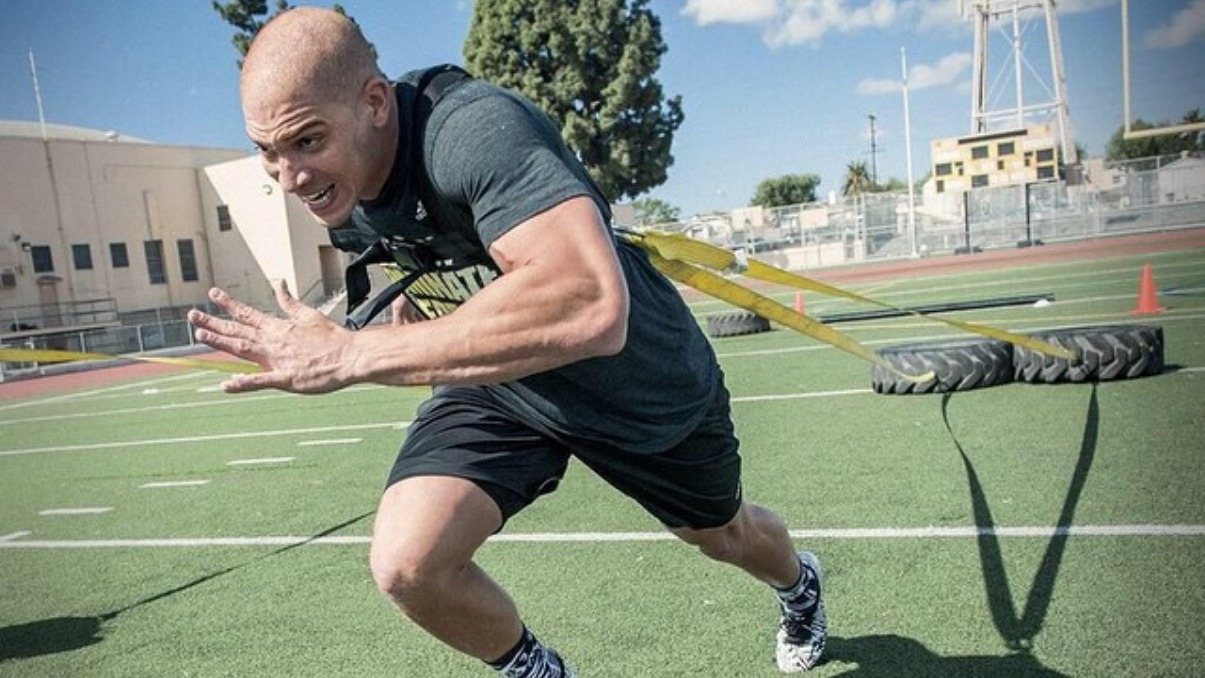
Who is Jimmy Graham?
Jimmy Graham’s journey to professional football is one of the most remarkable stories in the NFL. Raised in foster care and group homes in North Carolina, Graham earned a basketball scholarship to the University of Miami before a late transition to football transformed his life.
Over 13 NFL seasons with the New Orleans Saints, Seattle Seahawks, Green Bay Packers, and Chicago Bears, Graham became one of the most prolific tight ends in league history – recording 719 receptions, 8,545 receiving yards, and 89 touchdowns. He was named to five Pro Bowls and earned First-Team All-Pro honours in 2013.
The Challenge
In November 2015, while playing for the Seattle Seahawks against the Pittsburgh Steelers, Graham went up for a pass in the end zone and came down with a devastating injury: a complete rupture of his patellar tendon. His kneecap displaced into his quadriceps.
Medical literature shows that fewer than half of NFL players who suffer patellar tendon ruptures ever return to professional competition. It was, by all conventional measures, a career-ending injury.
Graham underwent surgery and embarked on an intensive rehabilitation. It took six months to walk again, seven months to jog, and eight months to run. Nine months after the injury he returned to NFL competition – but every step hurt. His quadriceps had atrophied because persistent pain prevented him from rebuilding the muscle to full strength.

The Decision
Searching for alternatives to further surgery, Graham explored the landscape of autologous biological preparations. He first tried a domestic bone marrow aspiration procedure – extracting material and injecting it directly back into his knee. The results were minimal.
He then learned about European approaches that involved more sophisticated processing of a patient’s own biological material. That search led him to Wellbeing International Foundation.
Graham had a small amount of biological material collected in the United States. It was shipped to Wellbeing International’s laboratory operating to GMP standards, where the pro-regenerative cell fraction was isolated and environmentally conditioned over several weeks. The entire infusion procedure took approximately fifteen minutes.
The Outcome
What Graham described next surprised him. Within hours of the procedure, while still at his hotel that same evening, he stood up and, in his own words, took his first pain-free step since the injury, more than a year and a half earlier.
In the weeks that followed, Graham found himself able to work out and rehabilitate with significantly less discomfort. His quadriceps, which had been unable to rebuild due to persistent pain, began to strengthen. He returned to full NFL competition and recorded ten touchdowns in the following season.
Perhaps most notably, a separate tear in his opposite patellar tendon – documented on earlier imaging – was no longer visible on a subsequent MRI. His chronic back issues, which had plagued him throughout his career, also resolved.
Atrophied quadriceps, every step painful, chronic back issues, a second tendon tear visible on MRI.
Pain-free within hours. Returned to full NFL competition. The second tear was gone on follow-up MRI. Back issues resolved.
A Lifelong Commitment
Graham continued returning to Wellbeing International Foundation. The results were not a one-time event – each subsequent preparation built on the previous, supporting ongoing recovery and performance maintenance across his career.
For Graham, the decision to make Cell-Free Therapy part of his long-term health strategy was straightforward: he found it valuable. He planned to use CFT for life, not just as a reactive measure for injuries, but as a proactive approach to supporting his body’s natural regenerative capacity.