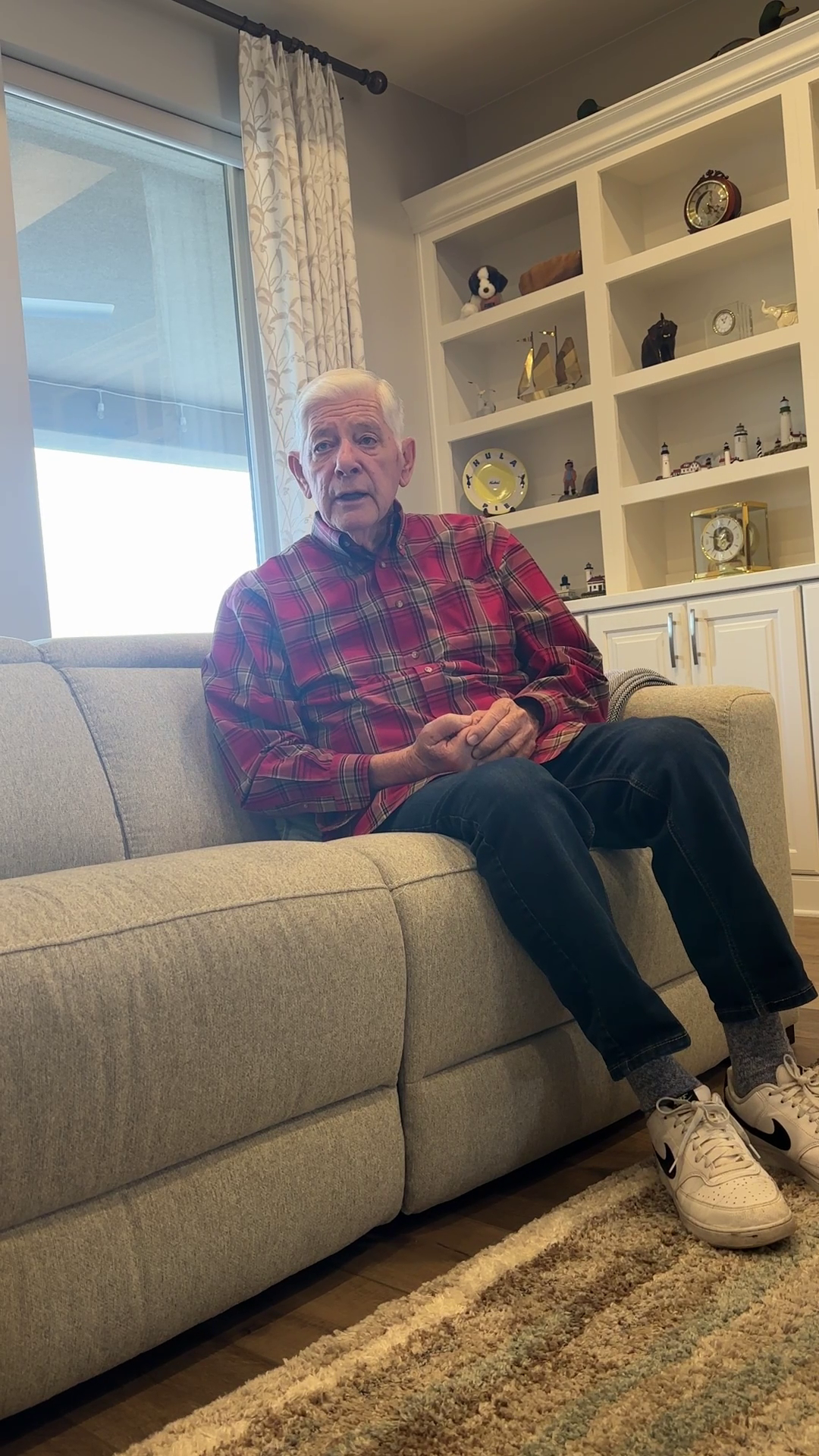
A Story of Determination
Not every story that matters takes place under stadium lights. Some of the most meaningful outcomes happen quietly – in rehabilitation rooms, on hospital corridors, and in the small, hard-won moments of daily life. Ron Morgan’s story is one of those. At 84 years old, Ron is not a professional athlete. He is a man who suffered a stroke and found himself fighting to reclaim the most fundamental human capability: the ability to walk. His experience with WIF and Cell-Free Therapy produced one of the most striking measurable outcomes in the organization’s history – and it happened within just two weeks.
The Challenge
Stroke is one of the leading causes of long-term disability worldwide. Aftermath often involves significant impairment to mobility, balance, coordination, and endurance. For older patients, the path to functional recovery is particularly challenging – the body’s natural restorative capacity diminishes with age, and compounding effects of reduced mobility can create a downward spiral affecting independence, dignity, and quality of life. Ron faced exactly this. Following his stroke, his functional capacity had declined significantly. Walking – something most people take for granted – had become an enormous physical challenge. His baseline was established using the six-minute walk test, a standardized clinical assessment tool. Walk as far as you can in six minutes. Ron’s initial result: 205 steps.
The Turning Point
Ron and his family sought out Wellbeing International Foundation as part of a comprehensive approach to supporting his recovery. CFT – a conditioned autologous blood-derived preparation containing extracellular vesicles, growth factors, and signaling molecules derived entirely from the patient’s own blood – offered an approach grounded in supporting the body’s normal biological function.
The Experience
Ron received a single CFT infusion as part of his care protocol. The preparation – processed in Wellbeing International’s laboratory operating to GMP standards from Ron’s own biological material – was administered intravenously. The procedure itself was brief and straightforward, requiring no surgical intervention and no extended clinical stay.
The Outcome
Approximately two weeks after his single CFT infusion, Ron was administered the same six-minute walk test. The result was remarkable. Ron’s step count nearly tripled – from 205 to almost 600 – in just two weeks following a single infusion. In the context of stroke rehabilitation, where progress is typically measured in small increments over months, this degree of functional improvement over such a short timeframe is extraordinary.
Why This Matters
The six-minute walk test is not a subjective measure. It is a validated, reproducible clinical assessment used in hospitals and rehabilitation centers worldwide. An improvement of this magnitude – nearly tripling baseline performance in two weeks – represents a meaningful change in functional capacity with direct implications for independence, safety, and daily quality of life. For an 84-year-old stroke survivor, the ability to walk further, more steadily, and with greater endurance is not an abstract statistic. It is the difference between needing constant assistance and regaining a measure of autonomy.
A Different Kind of Patient Story
Wellbeing International Foundation’s work with elite athletes generates the headlines. But Ron Morgan’s story illustrates something equally important: that autologous biological preparations supporting the body’s normal function are not limited to the young or the athletic. The body’s own biological systems – extracellular vesicles, growth factors, signaling molecules – belong to every patient, at every age. Ron’s experience suggests that supporting those endogenous processes can be meaningful at a stage of life when the body’s natural capacity may need it most.