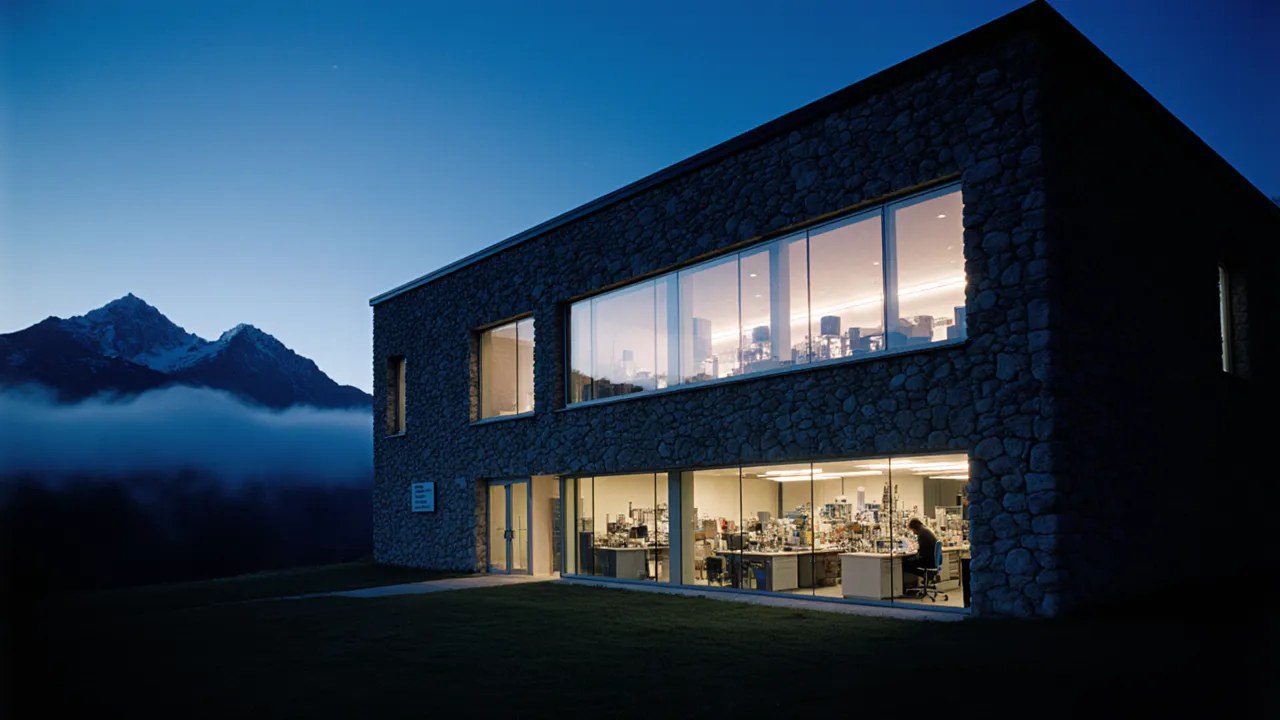
The research lineage that became Wellbeing International Foundation began in a quiet Swiss laboratory in the early 1990s, working on a question that, at the time, very few people in regenerative medicine were asking. The accepted view was that the future of repair and regeneration lay in transplantable cells: take a tissue sample, expand it in culture, return it to the body, and rely on the cells themselves to integrate, multiply, and become whatever the body needed them to become. It was an intuitive picture and an appealing one. It also turned out, slowly, to be incomplete.
A small group of researchers, working in laboratories operating under United Kingdom regulatory approvals for cell-derived research at the time, kept noticing the same thing in their experimental and patient data. When their cell therapies worked, the cells themselves rarely seemed to be there long enough to be the active agent. They appeared in small numbers. They persisted for days rather than weeks. And yet the biological effects in the surrounding tissue continued well past the period when the cells should have been measurable.
The implication was simple to state and difficult to investigate. If the cells were not the active ingredient, something else was. The most plausible candidate, the working hypothesis the early team operated under, was that cells were producing and releasing biological signals into their environment. Those signals, rather than the cells themselves, were doing the regenerative work. Working out what those signals were, how to elicit them reliably, and how to deliver them to patients became the long-running research programme.
That programme is what eventually became the Wellbeing International Foundation. Through the late 1990s and the 2000s the work continued slowly, building a body of patient observation and laboratory characterisation, mostly out of view of mainstream regenerative-medicine publishing. Partnerships with academic and clinical researchers in the United Kingdom and across Europe formed. Many of the people involved in those early years are still involved today, including Wellbeing’s Senior Consultant Scientist Dr Steve Ray, whose work on the secretome of stem cells became one of the more cited lines of evidence in the field.
Andrew Chancellor, Wellbeing’s chief executive, joined the work after a career that had moved through banking and international recruitment, drawn in part by the same question that had animated the original Swiss laboratory: whether the active biology of a cell could be drawn out and reliably reproduced as a therapeutic preparation. Max Lewinsohn, Wellbeing’s chairman, has been part of the work for much of its modern life and continues to chair the board, with a finance and strategy background that has shaped how Wellbeing thinks about discipline, governance, and pace.
Wellbeing today operates from headquarters in Hamilton, Bermuda, with clinical relationships in the United States, Europe and Asia, and a research programme that has moved over time from its original cell sources through to its current focus on blood-derived, autologous, cell-free biological preparations. The form of the work has evolved significantly. The underlying question has not.
The intent is not to retell a long history in full but to mark the moments that shaped how the current research programme thinks. Subsequent pieces in the series cover the paracrine-signalling science that emerged in the 2010s, the FDA’s 2017 framework for human cell and tissue products, and the named-athlete voices that joined the work from 2018 onward.
For readers who arrive at the news section through a clinical, research, or athletic interest in Wellbeing’s current work, the relevant point of this piece is simple. The cell-free, autologous research approach you read about elsewhere on this site is not a 2020s pivot dressed up as a long heritage. It is the working answer to a question first asked thirty years ago, refined, narrowed, and tested across a generation of patient and laboratory work.