What Are Extracellular Vesicles?
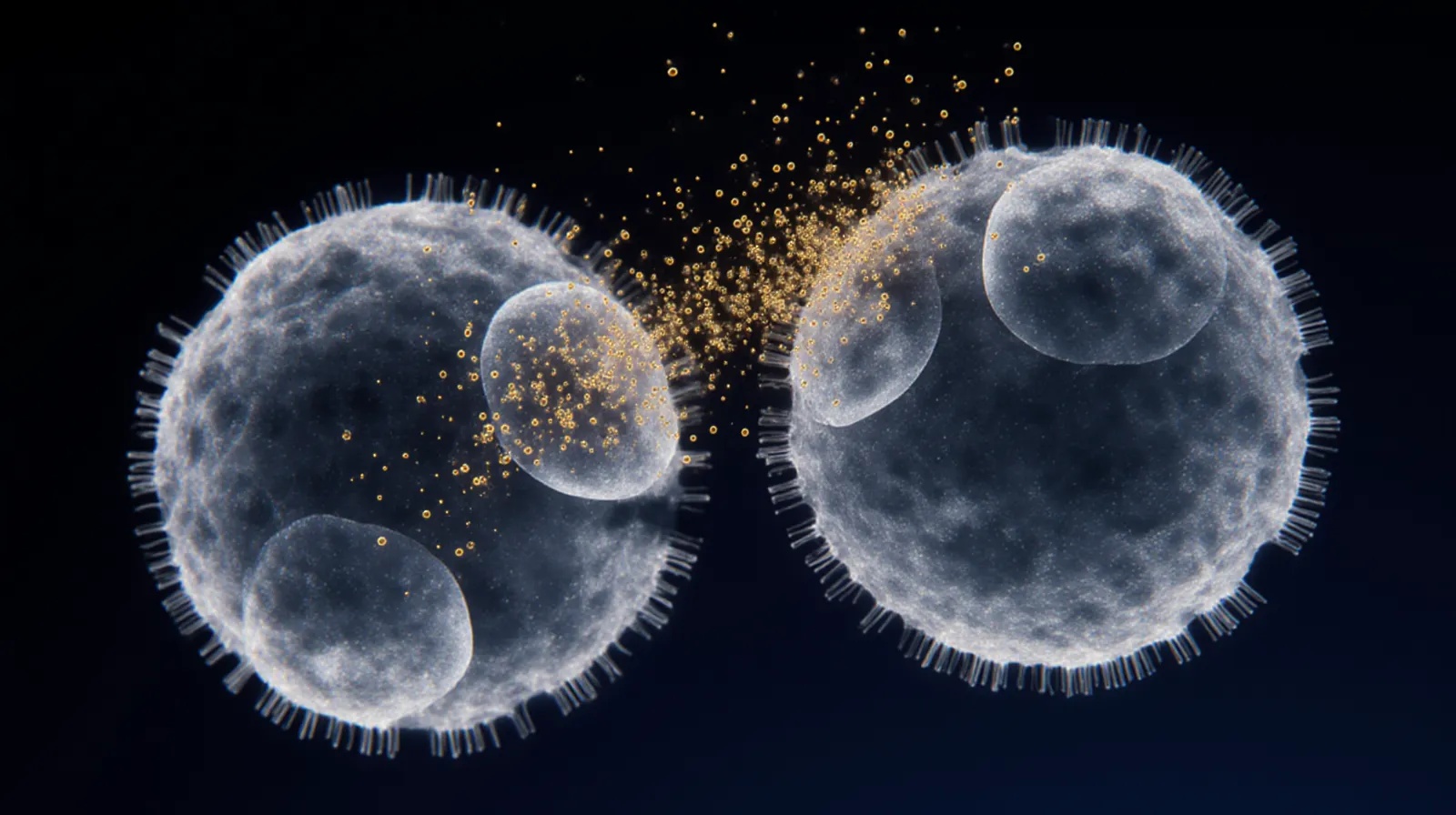
Your cells are constantly communicating with one another, and much of this conversation happens through tiny packages called extracellular vesicles (EVs). These microscopic structures – often no larger than a billionth of a meter – serve as courier systems, transporting proteins, lipids, nucleic acids, and other signaling molecules between cells. Think of them as biological envelopes that cells use to send messages and instructions across your body.
Extracellular vesicles weren't always understood by the medical community. For decades, they were largely dismissed as cellular "garbage." It wasn't until the early 2000s that researchers began to recognize them for what they truly are: sophisticated communication vehicles that regulate everything from immune function to tissue repair. Today, EVs are at the forefront of regenerative medicine research, and they form a critical component of Cell-Free Therapy.
The Three Main Types of Extracellular Vesicles
Exosomes
Exosomes are the smallest extracellular vesicles, typically ranging from 30 to 150 nanometers in diameter. They're produced when cells form internal compartments called multivesicular bodies (MVBs), which then fuse with the cell membrane and release their cargo. Exosomes are remarkably stable in circulation and can travel far through the bloodstream to reach distant cells. This makes them particularly valuable for therapeutic applications, as they can deliver their bioactive cargo throughout the body with precision.
Microvesicles
Microvesicles are larger than exosomes, ranging from 100 to 1,000 nanometers. They bud directly from the cell membrane and are released when cells respond to stress or damage. These vesicles often carry surface proteins that serve as "address labels," helping them reach target cells. Microvesicles play a key role in inflammation regulation and are important signals in tissue injury and healing responses.
Apoptotic Bodies
Apoptotic bodies are the largest type of EV, ranging from 500 to 4,000 nanometers. They're released when cells undergo controlled cell death (apoptosis). Despite their origin in dying cells, apoptotic bodies serve important biological functions – they help clear cellular debris and carry anti-inflammatory signals that promote tissue healing and reduce inflammation. This is particularly relevant for Cell-Free Therapy, where controlled apoptosis of donor cells releases their therapeutic cargo.
Extracellular vesicles are nature's original "drug delivery system" – they've been optimized by evolution over millions of years to deliver bioactive messages exactly where they're needed.
How Extracellular Vesicles Facilitate Cell-to-Cell Communication
EVs communicate through a process called paracrine signaling. When released into the extracellular space, these vesicles travel through tissue fluids and blood, seeking out target cells. Upon contact, they bind to specific receptors on the cell surface through recognition of their molecular signatures. Once bound, the EV transfers its cargo directly into the target cell, where the delivered proteins and nucleic acids can exert their effects.
This mechanism is fundamentally different from direct cell contact. Whereas traditional cell-to-cell communication requires physical proximity, EVs can traverse significant distances to reach their targets. A single cell can release hundreds to thousands of EVs per day, creating a constant stream of biological information flowing throughout your body. These vesicles carry not just proteins, but also microRNAs (miRNAs) that can regulate gene expression in target cells – essentially rewriting the instructions for how target cells behave.
The specificity of this communication is remarkable. Different cell types release EVs with different contents, and different target cells respond to different EV signals based on their unique receptor profiles. This creates a sophisticated system of biological communication that coordinates tissue repair, immune regulation, and overall homeostasis.
The Role of Extracellular Vesicles in Regenerative Medicine
The regenerative potential of EVs lies in their ability to activate your body's innate healing mechanisms. When injured, tissues don't repair themselves in isolation – they receive coordinated signals from surrounding cells, immune systems, and vascular networks. EVs play a central role in orchestrating this coordinated response. They can reduce inflammation, stimulate the recruitment of repair cells, promote the growth of new blood vessels, and encourage cellular proliferation and differentiation.
Research has demonstrated that EVs derived from mesenchymal stem cells (MSCs) – a type of cell well-suited for regenerative applications – can reduce pain and improve function in damaged joints and tendons. They do this not by replacing damaged tissue directly, but by creating an environment where your body's own repair mechanisms work more effectively. This is why Cell-Free Therapy is so powerful: it harnesses the signaling potential of these vesicles without requiring living cells.
Extracellular Vesicles and Cell-Free Therapy
Cell-Free Therapy works precisely because it captures the full spectrum of extracellular vesicles and their bioactive cargo. When we culture cells under specific conditions and then harvest the surrounding medium (without including the cells themselves), we capture all three types of EVs plus the complete secretome of proteins and other factors. This whole-vesicle approach is crucial – the synergistic interactions between different EV types and proteins create a more powerful therapeutic effect than any single component could achieve alone.
By concentrating this EV-rich secretome and injecting it directly into damaged tissues, we're essentially flooding the injury site with the same biological signals that your body would naturally produce during optimal healing. The EVs deliver their cargo directly to cells in the damaged tissue, activating repair mechanisms and reducing inflammatory signals. Multiple EVs can target the same cell, creating cumulative effects that are stronger than single-molecule therapies.
The beauty of Cell-Free Therapy is that it leverages billions of years of evolutionary optimization. Extracellular vesicles have been perfected by nature to communicate healing signals precisely where they're needed.
The Future of Extracellular Vesicle Research
The field of EV research is advancing rapidly. Scientists are now exploring ways to engineer EVs with enhanced therapeutic properties, to track EVs in real-time using imaging techniques, and to develop personalized therapies based on an individual's own EV biology. Some researchers are even investigating how to load EVs with specific therapeutic proteins or genetic instructions, creating "smart vesicles" that could address specific disease mechanisms.
At the same time, the regulatory landscape for EV-based therapies is evolving to reflect our deeper understanding. As more clinical data accumulates showing the safety and efficacy of Cell-Free Therapy and other EV-based approaches, we expect to see broader clinical adoption and insurance coverage. The convergence of basic science, regulatory clarity, and clinical evidence is creating an optimal environment for regenerative medicine to transform how we approach tissue repair and functional restoration.
Conclusion
Extracellular vesicles represent one of nature's most elegant solutions to the problem of biological communication. These tiny messengers carry the instructions your body needs to heal itself, and by harnessing them through Cell-Free Therapy, we're tapping into mechanisms refined over millions of years of evolution. Understanding EVs isn't just an academic exercise – it's the key to unlocking your body's own regenerative potential.