The Concept of Paracrine Signalling
Your body is a ecosystem of constant communication. Most people think of cell-to-cell communication as a direct, physical process – cells touching one another or sending signals through neural pathways. But much of your body's most important communication happens indirectly, through a mechanism called paracrine signaling. This is how cells that never physically touch one another can orchestrate complex, coordinated responses.
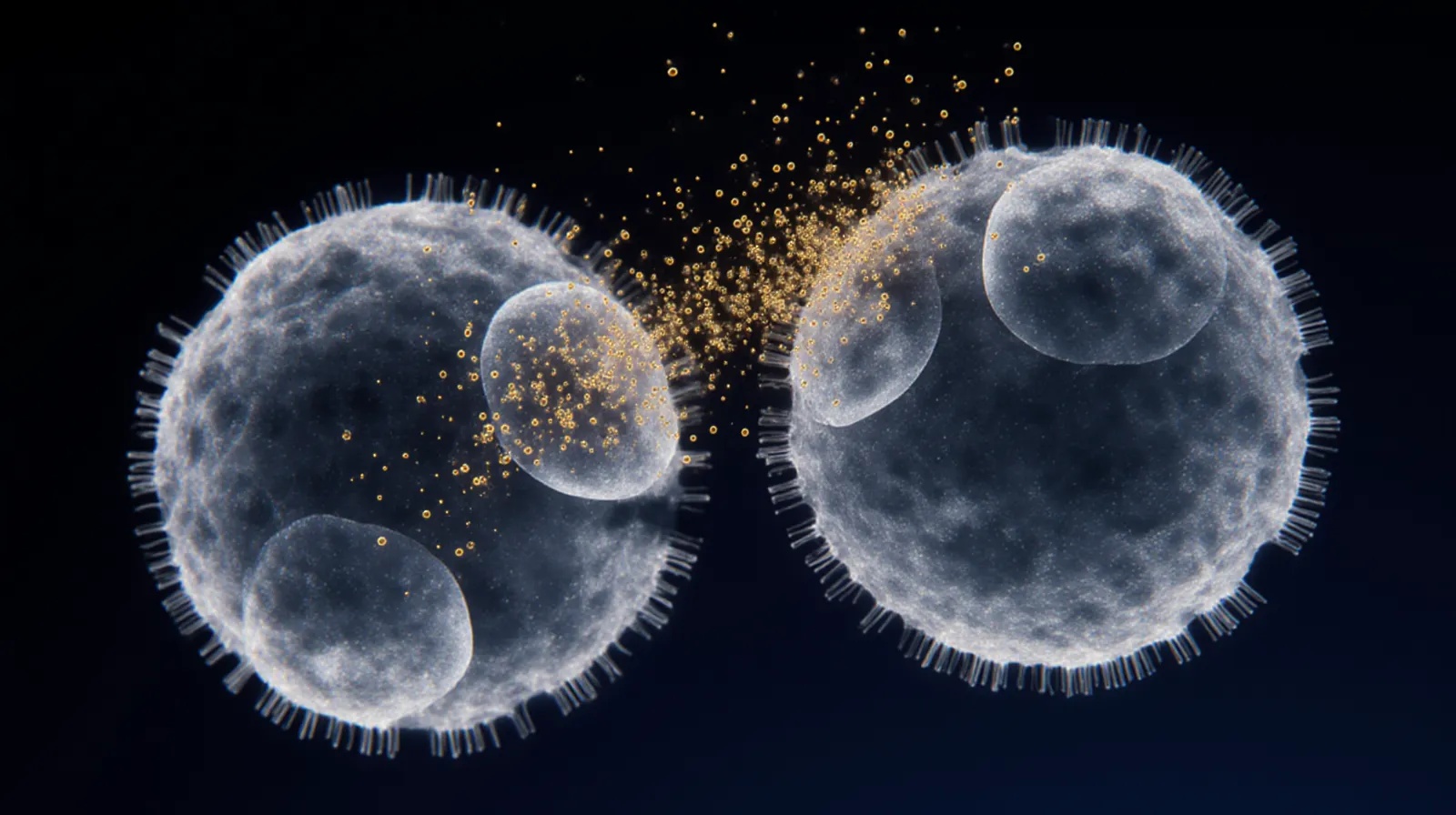
Paracrine signaling refers to the process by which cells secrete signaling molecules into the extracellular space surrounding them, and those molecules affect nearby cells. The word "paracrine" comes from Greek, meaning "near" and "to secrete" – it's communication across short distances through secreted factors. Unlike hormonal (endocrine) signaling, which can affect distant cells throughout the body, paracrine signals work at a local level, creating a neighborhood of coordinated cellular activity.
This localized communication system is extraordinarily sophisticated. Cells release a constant stream of signaling molecules, target cells respond based on their unique receptor profiles, and the result is a precisely orchestrated dance of cellular cooperation. When an injury occurs, paracrine signaling is what coordinates the inflammatory response, recruits repair cells, and instructs damaged tissue how to heal itself.
How Paracrine Signalling Works
Release and Diffusion
When a cell releases signaling molecules into its local environment, these molecules spread outward through the extracellular space. They can diffuse freely if they're small enough, or they can be transported by extracellular vesicles if they need protection during their journey. The concentration of these signaling molecules naturally decreases with distance from the source, which is why paracrine signals are "local" – they affect cells nearby more strongly than distant cells.
Receptor Recognition and Binding
Signaling molecules don't affect every cell they encounter. Instead, they can only affect cells that have the appropriate receptor for that signal. Receptors are like locks, and signaling molecules are like keys – they only work when the right key finds the right lock. Different cell types have different combinations of receptors, which is why the same paracrine signal can produce different effects in different types of cells.
Cellular Response
Once a signaling molecule binds to its receptor, it triggers a cascade of chemical reactions inside the target cell. These intracellular reactions alter gene expression, change cellular behavior, or trigger specific cellular responses. A single cell might simultaneously receive multiple different paracrine signals, and the outcome of the cell's response depends on the combination of signals it receives.
Paracrine signaling is biological democracy at the cellular level – cells aren't ordered around by distant authorities, but rather respond to their immediate neighbors with precision and flexibility.
Types of Paracrine Signals
Growth Factors
Growth factors are proteins that stimulate cell proliferation and differentiation. They're particularly important in tissue repair, where they stimulate the recruitment and expansion of repair cells. Examples include fibroblast growth factors (FGFs), transforming growth factors (TGFs), and vascular endothelial growth factors (VEGFs). Each serves a specific role in orchestrating tissue healing.
Cytokines
Cytokines are signaling proteins that regulate inflammation and immune function. They're released by immune cells and can either promote inflammation (pro-inflammatory cytokines) or reduce it (anti-inflammatory cytokines). In the context of injury and repair, the timing and balance of cytokine signaling determines whether tissue is cleared of debris and healed, or whether chronic inflammation develops.
Extracellular Vesicles
As we discussed in our previous article on extracellular vesicles, EVs are increasingly recognized as critical paracrine signaling vehicles. They deliver their cargo – proteins, lipids, and nucleic acids – directly into target cells, creating more efficient and targeted paracrine communication than free-floating signaling molecules. Many of the growth factors and cytokines important for healing are delivered via EVs, making them the preferred biological delivery system.
Significance for Tissue Repair and Regeneration
When tissue is damaged, the healing response depends entirely on paracrine signaling. Damaged cells release alarm signals called damage-associated molecular patterns (DAMPs) that activate local immune cells. These immune cells then release cytokines that modify inflammation, recruit repair cells, and create an environment where new tissue can grow. Simultaneously, growth factors stimulate the proliferation and differentiation of cells that will form new tissue.
This is a precisely timed symphony. Too little inflammation and debris doesn't get cleared; too much and chronic inflammation impairs healing. The balance depends on the right paracrine signals being delivered to the right cells at the right time. This is why some injuries heal beautifully while others develop complications – it's all about the quality of paracrine signaling in the injury environment.
How Cell-Free Therapy Harnesses Paracrine Signalling
Cell-Free Therapy works because it's essentially paracrine signaling in concentrated form. When we harvest the secretion products from cultured cells – including growth factors, cytokines, and extracellular vesicles – we're capturing the complete toolkit of paracrine signals that those cells would naturally produce. By injecting this concentrated secretome directly into damaged tissue, we're flooding the injury site with exactly the signals needed to activate optimal healing.
Because Cell-Free Therapy delivers the full spectrum of paracrine signals (not just one isolated growth factor), it can address multiple aspects of the healing response simultaneously. Inflammation is regulated, repair cells are recruited and stimulated, new blood vessel formation is promoted, and scar tissue formation is minimized. This comprehensive approach often produces better outcomes than single-component therapies that address only one mechanism of healing.
Cell-Free Therapy succeeds because it respects the sophistication of paracrine signaling – instead of trying to improve on nature's design, it harnesses nature's own communication system.
Clinical Implications
Understanding paracrine signaling has profound clinical implications. It explains why isolated growth factors often don't produce the expected clinical benefits – tissue repair isn't just about providing growth factors, it's about creating the right constellation of signals at the right times. It also explains why whole-secretome approaches like Cell-Free Therapy can be so effective: they're not replacing nature's system, they're amplifying it.
As our understanding of paracrine signaling deepens, we're beginning to understand why individual variation is so common in healing responses. Your unique combination of cell receptors, your age, your overall health status, and your previous injury history all influence how your cells respond to paracrine signals. This is why truly personalized regenerative medicine – tailored to an individual's unique paracrine signaling profile – represents the future of tissue repair.
Conclusion
Paracrine signaling is one of nature's most elegant solutions to a fundamental problem: how do cells coordinate complex, multi-step processes like tissue repair without central commands? The answer is through local, direct communication using carefully regulated signaling molecules. Cell-Free Therapy harnesses this system by providing the full spectrum of these paracrine signals exactly where they're needed. By working with biology rather than against it, Cell-Free Therapy activates your body's own innate healing mechanisms.