What Is the Secretome?
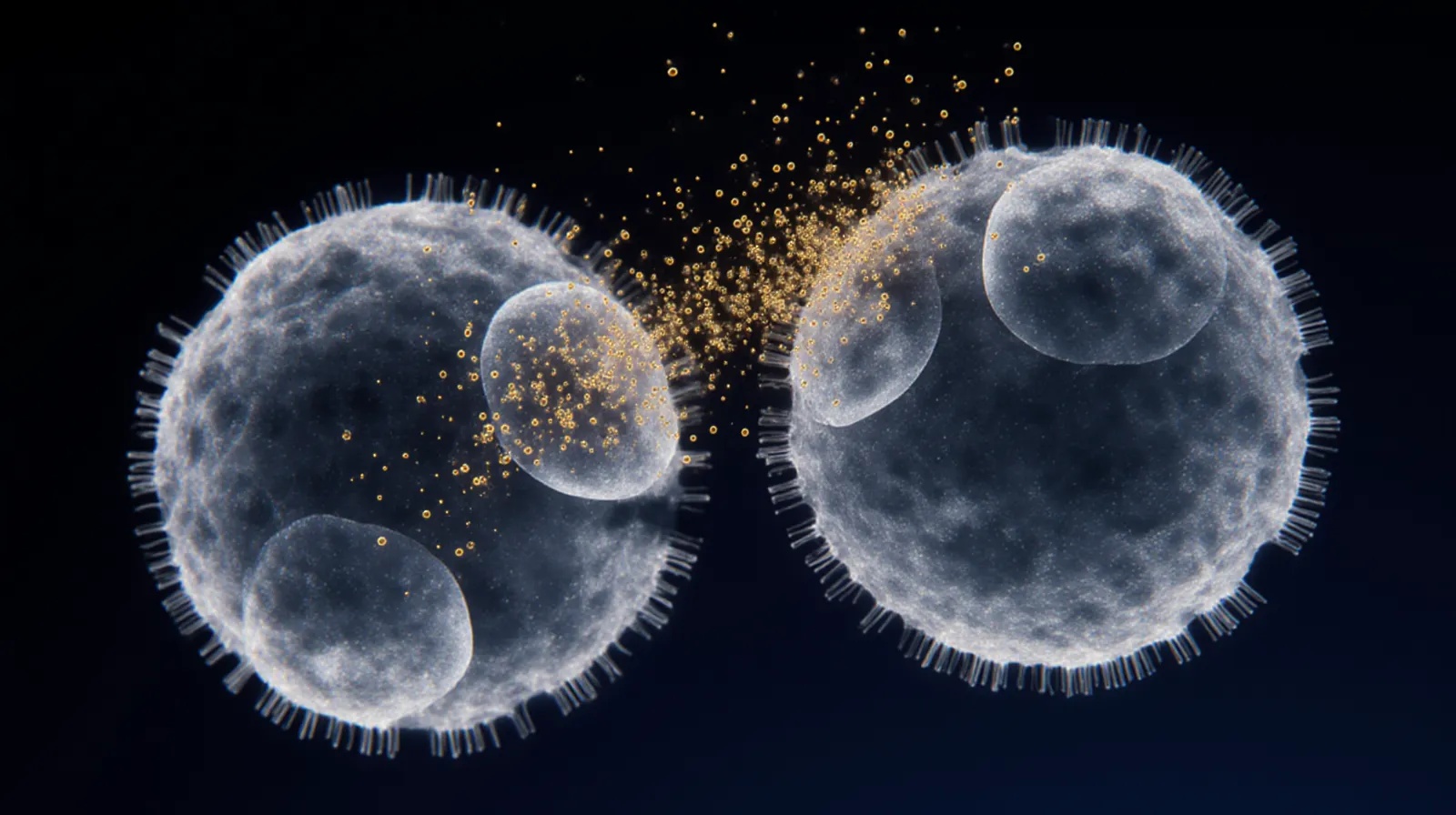
When a cell conducts its daily business, it doesn't just interact with neighboring cells through direct contact. Instead, it releases thousands of different molecules into its surrounding environment – a process called "secretion." The complete collection of all molecules secreted by a cell or group of cells is called the secretome. This includes proteins, lipids, nucleic acids, extracellular vesicles, and metabolites. The secretome is essentially a cell's way of announcing its status, broadcasting its needs, and influencing its environment.
The term "secretome" is relatively new in scientific literature, emerging only in the early 2000s as research technology advanced enough to comprehensively analyze everything a cell secretes. Before this, scientists typically focused on individual factors – a single growth factor, a specific cytokine. But the secretome represents a paradigm shift: instead of studying isolated components, we're now studying the complete communication signal that a cell broadcasts to its environment. This shift has profound implications for regenerative medicine.
Think of the secretome as a cell's complete resume. If you interview someone and listen only to their answer about their experience with one specific skill, you'll miss their full capabilities. Similarly, understanding only one growth factor from a cell's secretome misses the nuance and power of the complete signal. Cell-Free Therapy's power lies in capturing and delivering the complete secretome, not just individual components.
Components of the Secretome
Proteins and Growth Factors
Proteins are the most abundant components of the secretome. They include growth factors (FGF, VEGF, TGF-beta), cytokines (IL-6, IL-10), extracellular matrix proteins, and enzymes. These proteins serve diverse roles in tissue repair, ranging from stimulating cell proliferation to breaking down damaged tissue to promoting new blood vessel formation. The protein profile of a cell's secretome changes dynamically based on the cell's current state and environment.
Lipids and Lipid Mediators
Cells also secrete lipids and lipid-derived signaling molecules. These include prostanoids, leukotrienes, and lysophospholipids – all molecules that regulate inflammation and immune function. The lipid component of the secretome is particularly important for controlling the inflammatory phase of healing. Too much pro-inflammatory lipid signaling and healing is impaired; too little and tissue won't be adequately cleared of debris.
Nucleic Acids and MicroRNAs
Cells release DNA fragments, RNA, and specifically microRNAs (miRNAs) into their secretome. These nucleic acids serve as signaling molecules that can alter gene expression in target cells. When delivered via extracellular vesicles, miRNAs can reprogram target cells – essentially giving them new instructions for how to behave. This is one of the most sophisticated aspects of cellular communication.
Extracellular Vesicles
As we've discussed, EVs are carriers of secretome cargo. Exosomes, microvesicles, and apoptotic bodies all contain proteins, lipids, and nucleic acids from the secretome. What makes EVs special is that they protect their cargo and deliver it specifically to target cells rather than allowing it to diffuse randomly through tissue. In many cases, the EV-delivered component of the secretome is the most therapeutically active portion.
Why the Complete Secretome Matters More Than Isolated Components
Synergistic Interactions
The most important principle is this: the whole is greater than the sum of parts. When a cell secretes its complete secretome, the different components work synergistically. A growth factor might activate a receptor on a target cell, but the effect is amplified by simultaneous anti-inflammatory signaling and complementary protein-protein interactions. Neither component working alone could achieve what they accomplish together.
Think of it like an orchestra. A violin solo is beautiful, but a complete symphony is more powerful because each instrument enhances and complements the others. Similarly, a single growth factor might improve healing by 20%, but when combined with its full complement of supporting factors from the secretome, healing improvement might be 300%. That difference is synergy.
Addressing Multiple Repair Mechanisms Simultaneously
Tissue repair isn't a single process – it's a multi-step cascade involving inflammation, immune cell recruitment, growth factor signaling, angiogenesis (new blood vessel formation), and extracellular matrix remodeling. A complete secretome addresses all these mechanisms simultaneously through different components working on different pathways. A single isolated component can only address one mechanism, leaving the others unoptimized.
Redundancy and Robustness
The secretome has built-in redundancy. If one growth factor is slightly lower than ideal, others can partially compensate. This makes the complete secretome more robust and more likely to produce consistent results across different individuals and injury types. Single-component therapies lack this redundancy and often show highly variable results.
The secretome is nature's ultimate multitasking solution – a single coordinated signal that addresses tissue repair from multiple angles simultaneously, creating emergent effects that no single component could achieve alone.
How Cell-Free Therapy Captures the Complete Secretome
Cell-Free Therapy works by culturing cells under specific conditions and then harvesting the culture medium containing everything the cells have secreted. This captured secretome contains all the components we've described: proteins, growth factors, cytokines, lipid mediators, nucleic acids, and extracellular vesicles. Critically, it captures them in the natural proportions and combinations that the cells produce.
This is fundamentally different from trying to recreate the secretome by combining purified individual components. When researchers attempt to mix individual growth factors in ratios that match the natural secretome, the results are inevitably disappointing compared to the whole secretome. Why? Because they're missing subtle components, the precise molecular context, and the dynamic interactions between components that nature has optimized over millions of years of evolution.
By concentrating the complete secretome through Cell-Free Therapy, we're not trying to improve on nature's design. We're simply amplifying the signal that cells naturally produce during optimal healing. We're asking tissues to respond to an enhanced version of the biological signals they already know how to interpret perfectly.
Clinical Evidence for Secretome Effectiveness
Clinical research has consistently shown that whole secretome approaches outperform single-component therapies. Studies comparing isolated growth factors to complete secretome preparations show that the secretome produces better pain reduction, improved function, and more durable results. This is precisely what we'd expect if synergistic interactions between secretome components were driving the therapeutic effect.
The shift from single-component to whole-secretome approaches represents a fundamental change in how we think about regenerative medicine. Instead of trying to identify the "magic ingredient" and deliver more of it, we're recognizing that healing is orchestrated through coordinated signaling from many components working together. Cell-Free Therapy succeeds because it respects this biological complexity.
Future Directions in Secretome Research
As our understanding of the secretome deepens, researchers are exploring how to characterize and optimize secretome profiles for specific clinical applications. Some research focuses on understanding which cell types produce the most therapeutic secretomes for different injury types. Other work investigates how to enhance the secretome through culture conditions or genetic engineering. The ultimate goal is personalized secretome therapy – tailored to an individual's unique injury profile and healing characteristics.
The secretome represents a paradigm shift from trying to outsmart biology to collaborating with it – leveraging the sophisticated communication systems that cells have evolved to solve the fundamental problem of tissue repair.
Conclusion
The secretome is a window into how cells naturally communicate and orchestrate complex biological processes. Rather than trying to isolate specific components and improve them, Cell-Free Therapy harnesses the complete secretome – capturing the full spectrum of signaling molecules that evolution has optimized for healing. By delivering the complete secretome directly to damaged tissues, Cell-Free Therapy activates your body's own repair mechanisms more effectively than any single-component therapy can achieve. The secretome isn't just biology – it's proof that nature has already solved the problem of tissue repair. We just needed to learn how to listen.